Clean 10-page PDFs with answer keys for Grades 1 to 4. No sign-up, no pop-ups: pick a workbook and print.
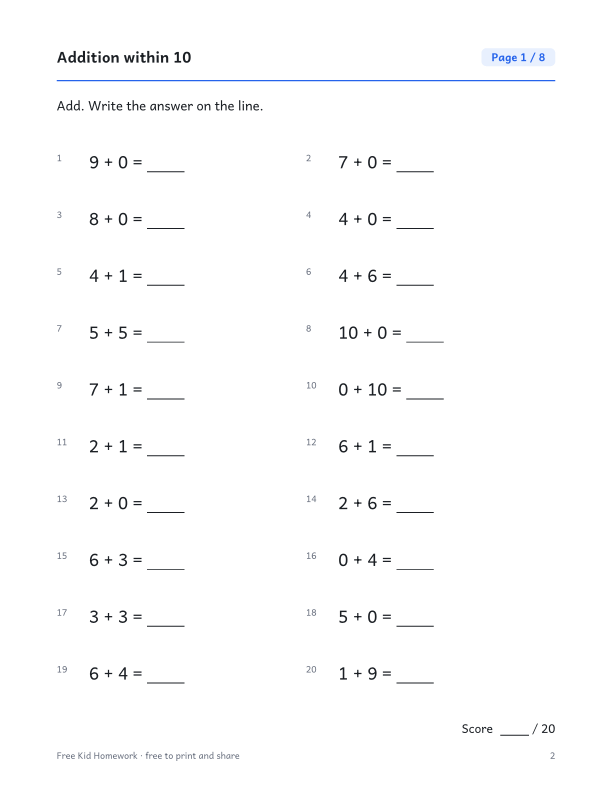
Single-digit addition facts with sums up to 10, the first facts children learn by heart.
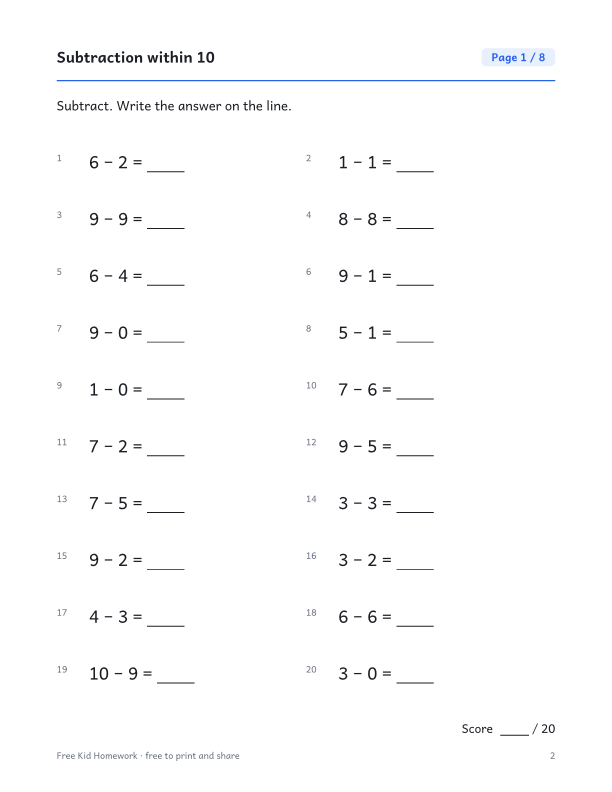
Subtraction facts starting from numbers up to 10, matching the addition facts learned in Grade 1.
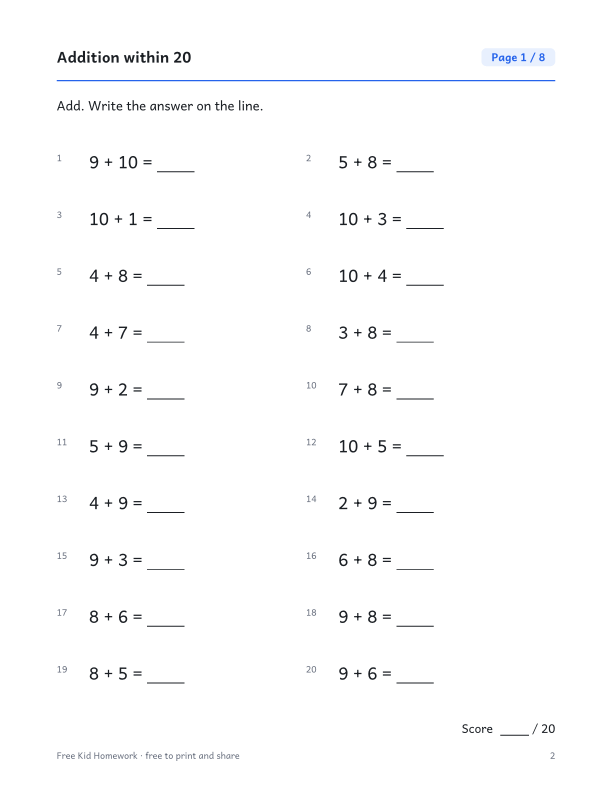
Addition facts with sums from 11 to 20, including crossing over ten.
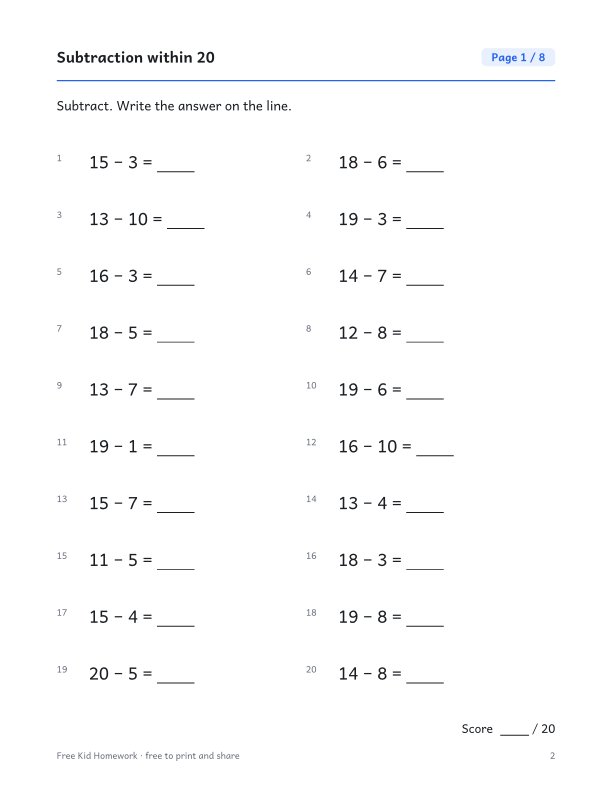
Subtraction from numbers 11 to 20, including crossing back over ten.
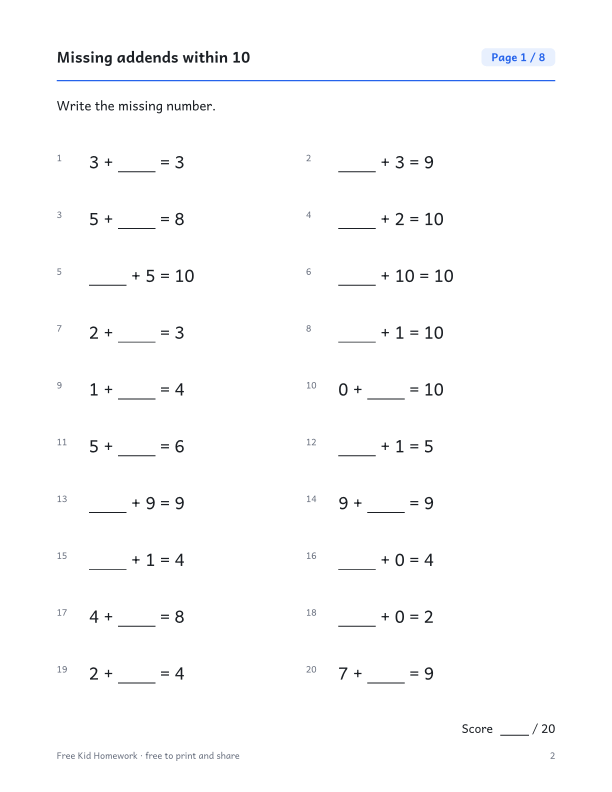
Find the missing number in addition sentences up to 10, a first step toward subtraction and algebraic thinking.
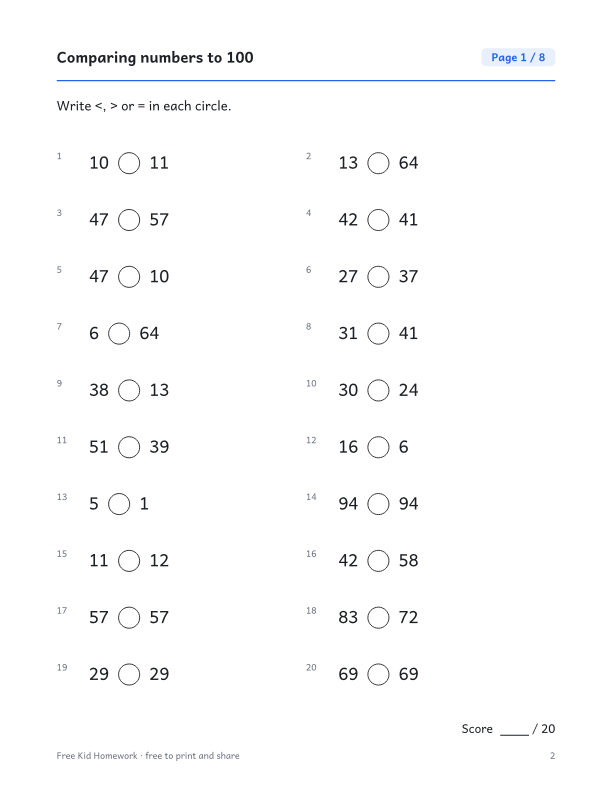
Compare two numbers up to 100 using the symbols <, > and =.
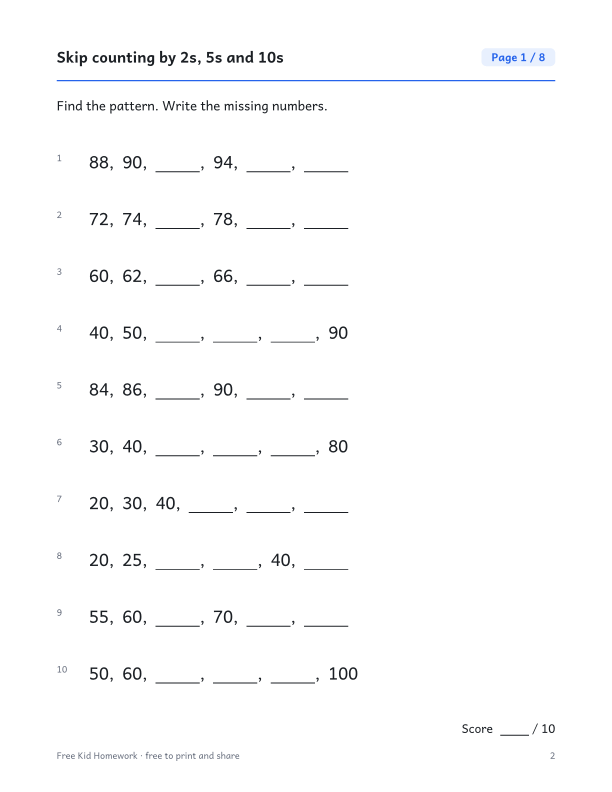
Number patterns counting forward by 2, 5 and 10 up to 100, which prepares children for multiplication.
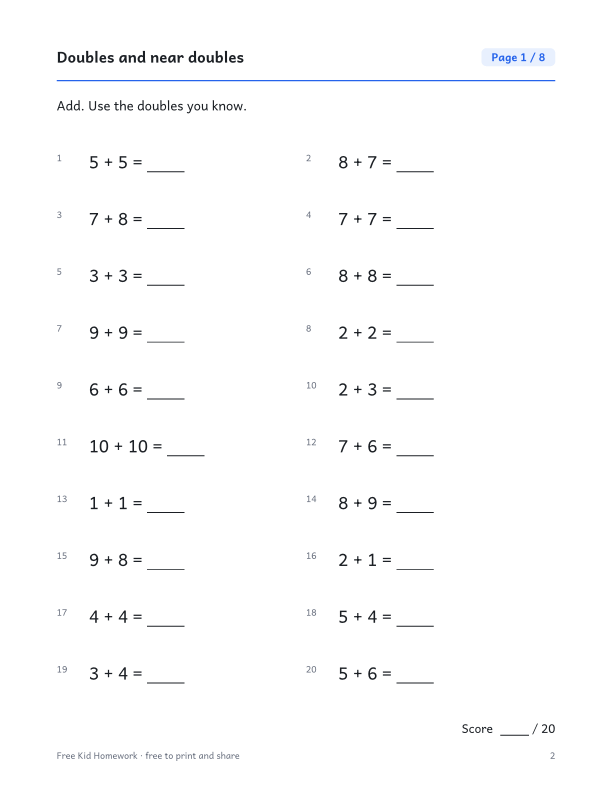
Doubles (6 + 6) and near doubles (6 + 7) up to 20, a mental-math strategy for fast addition.
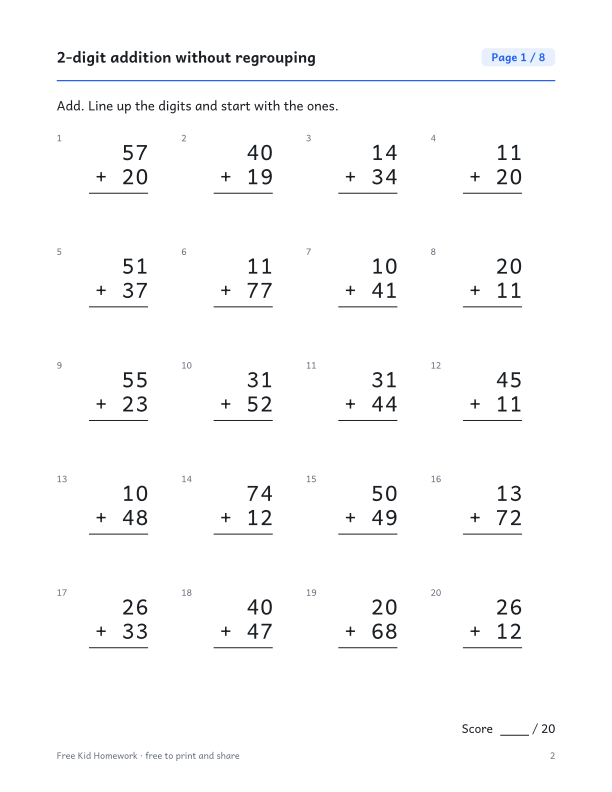
Column addition of two 2-digit numbers where no carrying is needed.
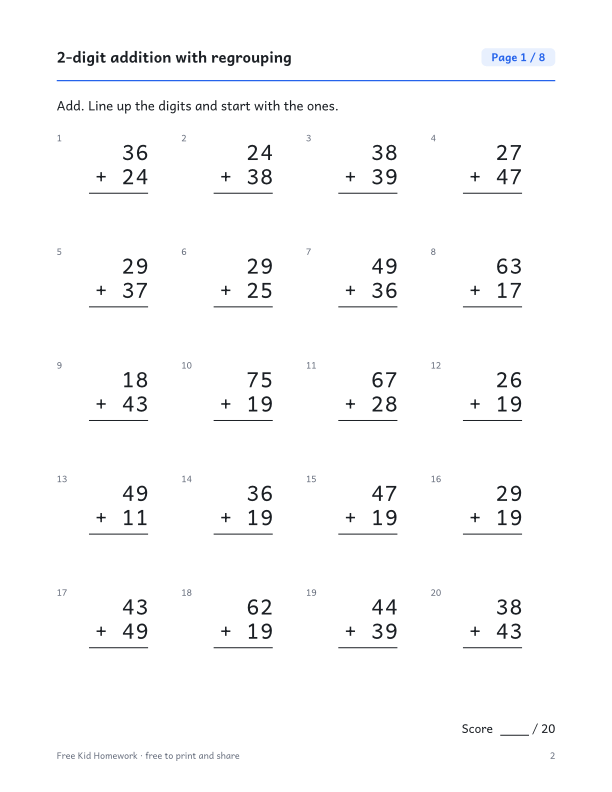
Column addition of two 2-digit numbers where the ones add up to 10 or more, so a ten must be carried.
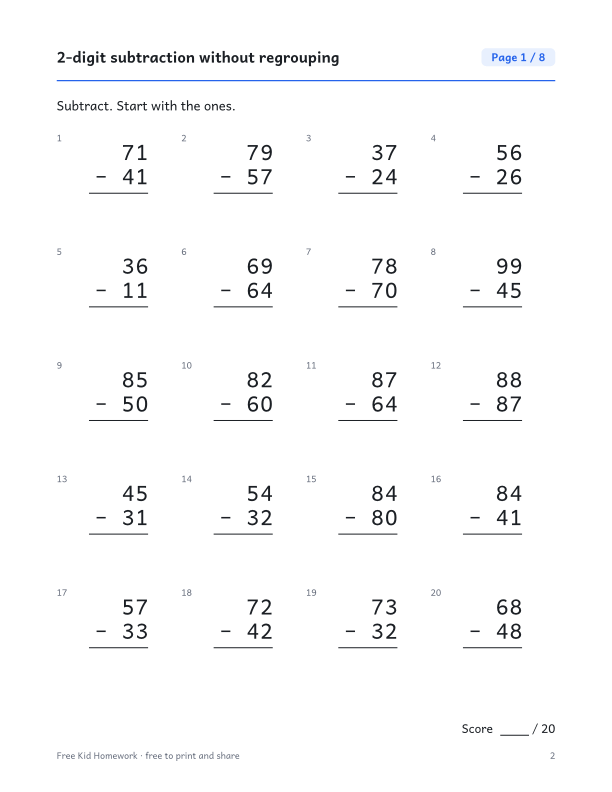
Column subtraction of 2-digit numbers where no borrowing is needed.
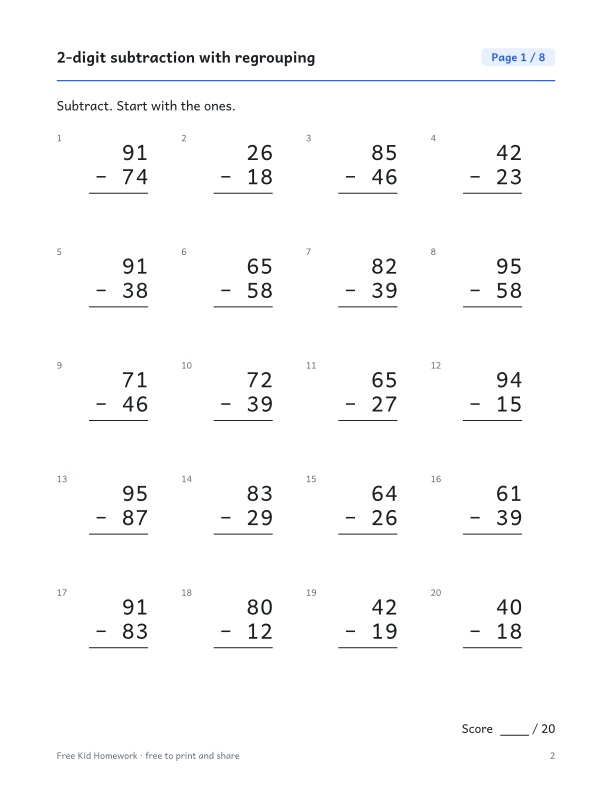
Column subtraction of 2-digit numbers where a ten must be borrowed (regrouped).
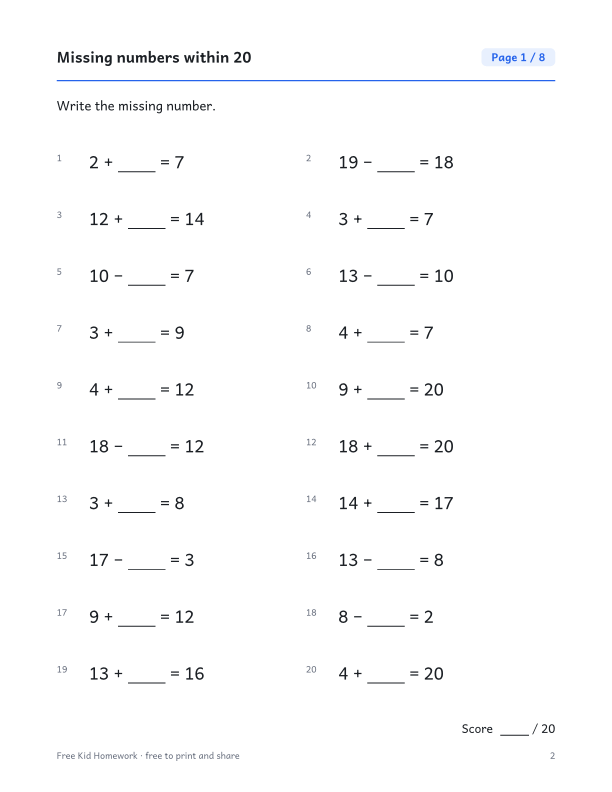
Addition and subtraction sentences up to 20 with one number missing.
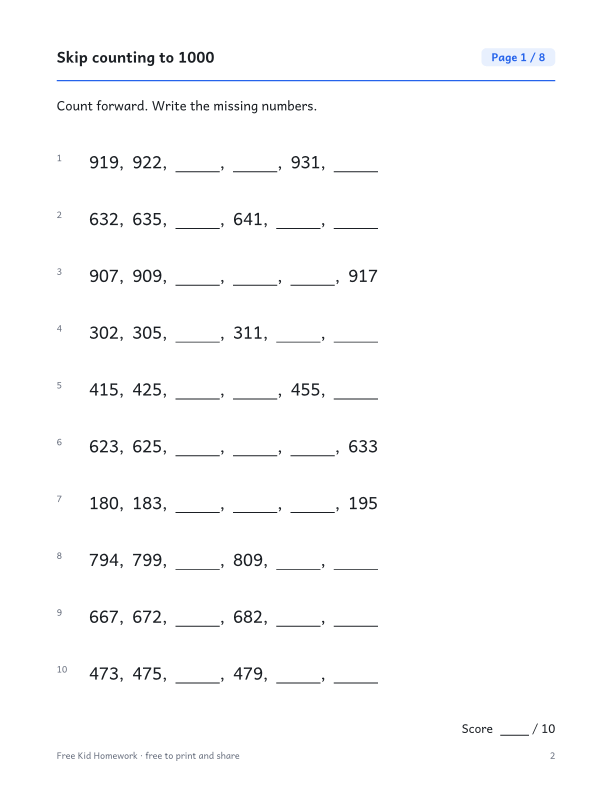
Number patterns by 2, 3, 5, 10 and 100 up to 1000, forward on the first four pages and backward on the last four.
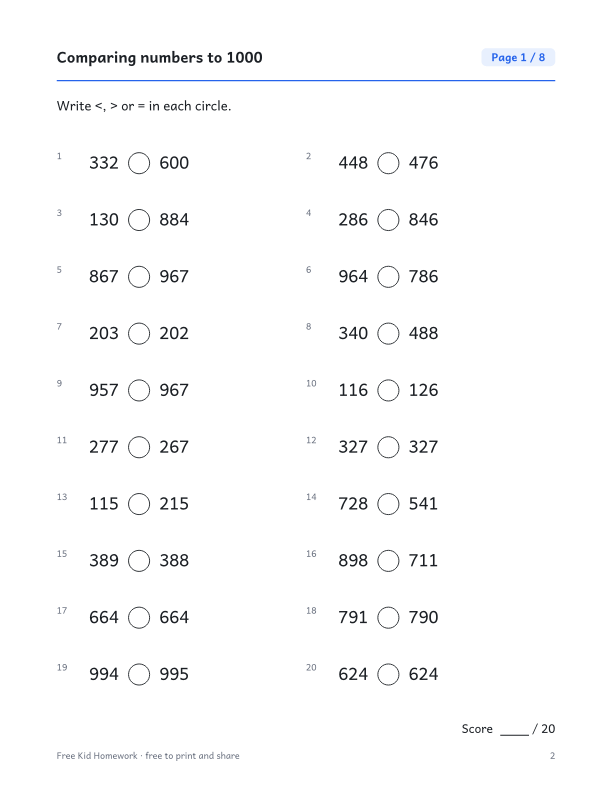
Compare 3-digit numbers using <, > and =, with many close pairs that differ by a single digit.
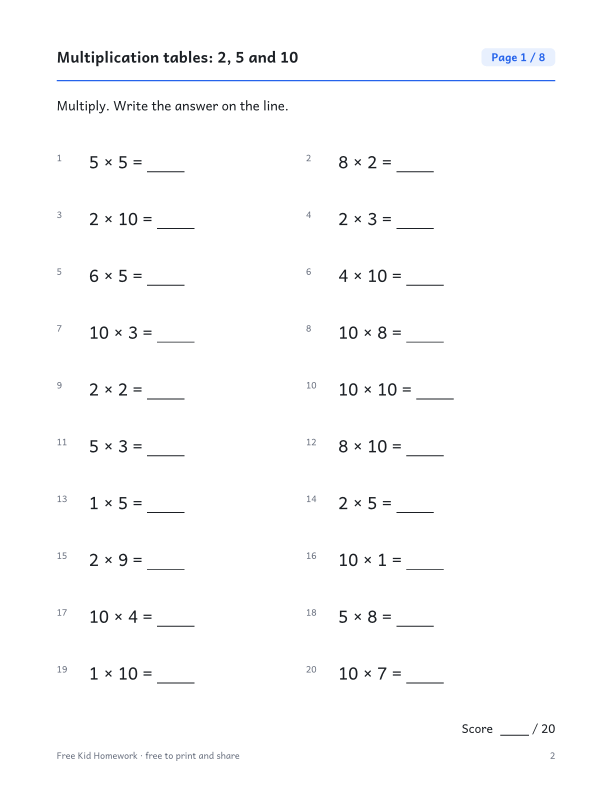
The first times tables children learn: 2, 5 and 10, in mixed order.
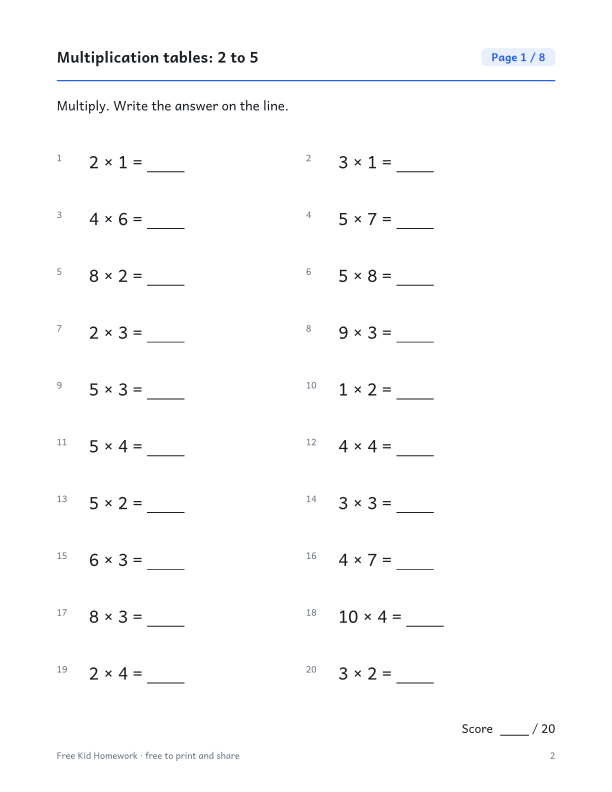
Mixed practice of the 2, 3, 4 and 5 times tables up to 10 times.
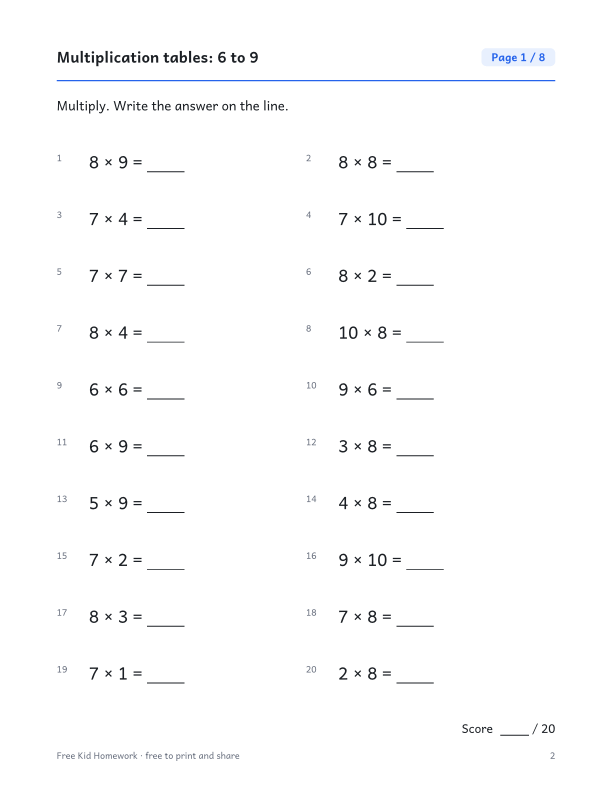
Mixed practice of the harder times tables: 6, 7, 8 and 9.
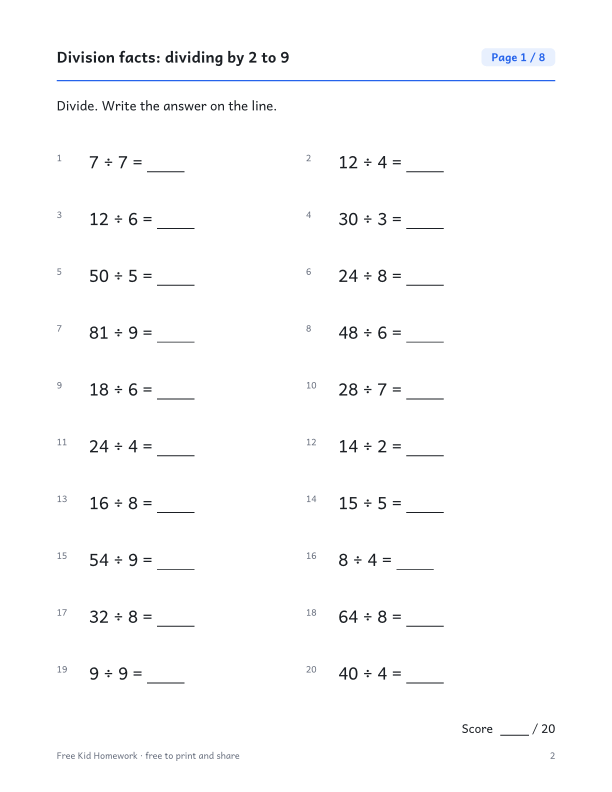
Basic division facts with no remainders, the inverse of the times tables up to 9 times 10.
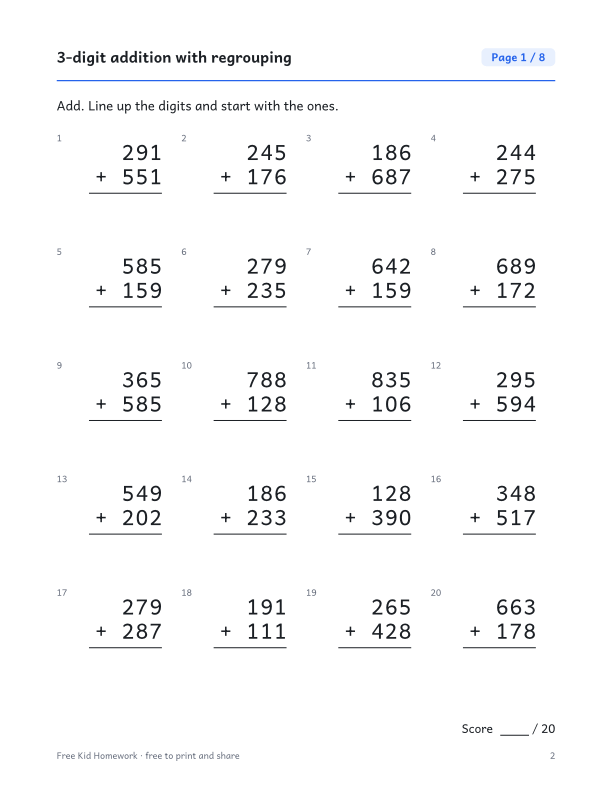
Column addition of 3-digit numbers with one or more carries, with sums up to 999.
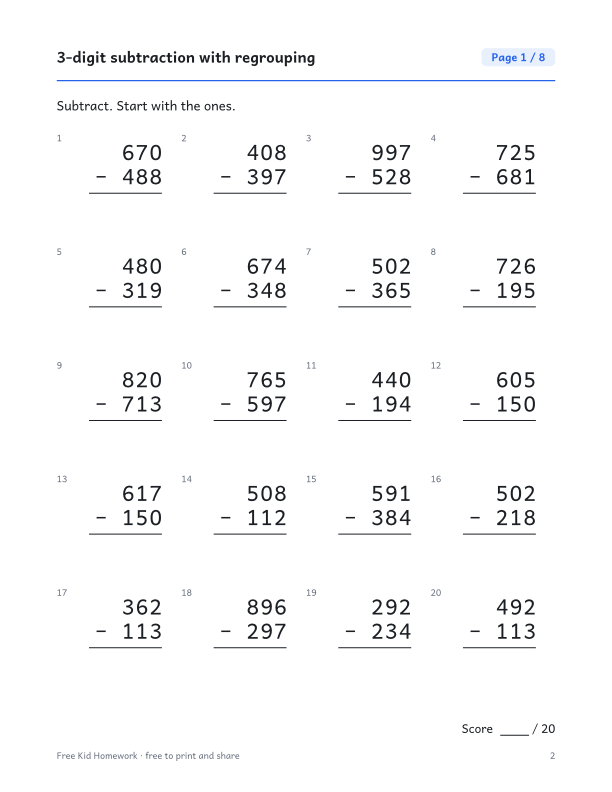
Column subtraction of 3-digit numbers with one or more borrows.
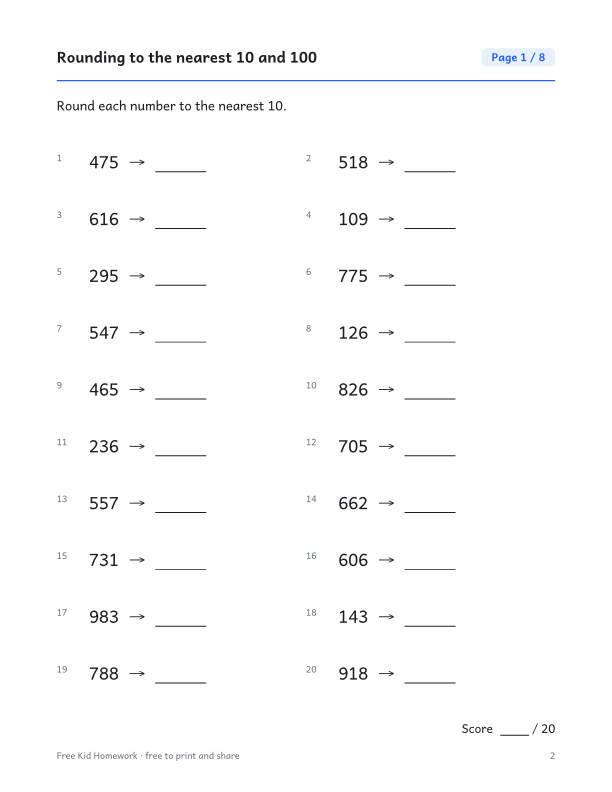
Round numbers up to 999 to the nearest ten (first four pages) and nearest hundred (last four pages).
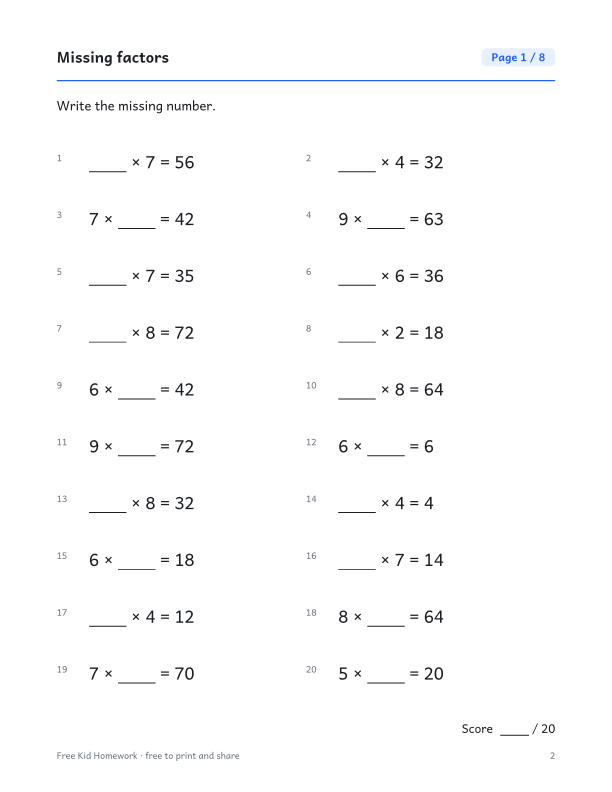
Find the missing factor in multiplication sentences from the 2 to 9 times tables, which links multiplication to division.
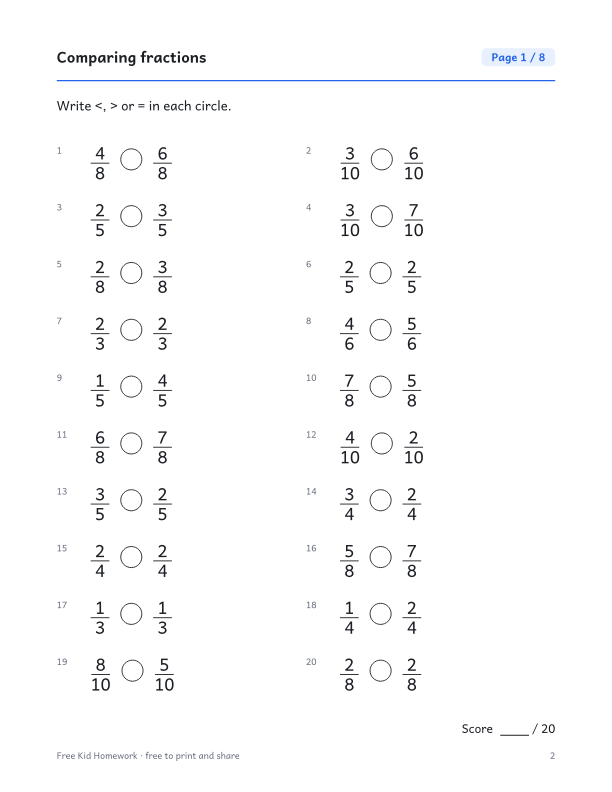
Compare fractions with the same denominator (first four pages) and the same numerator (last four pages).
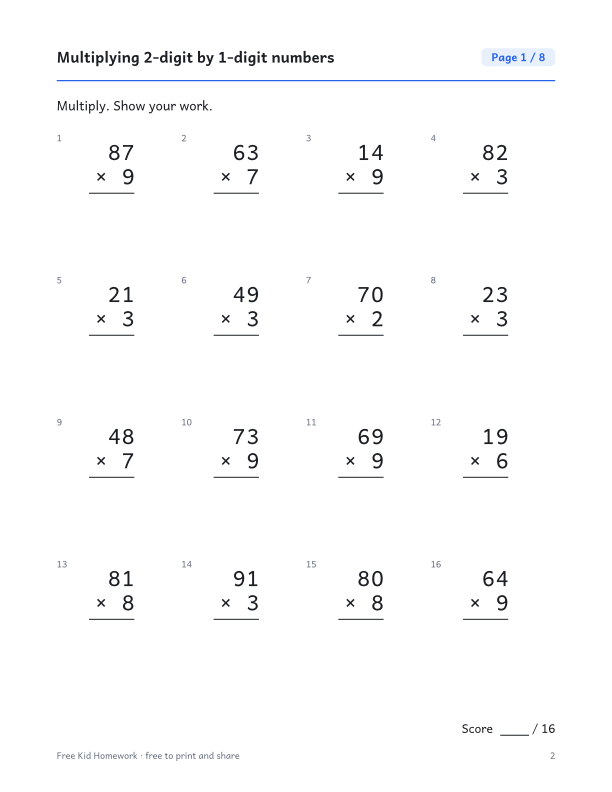
Column multiplication of a 2-digit number by a 1-digit number.
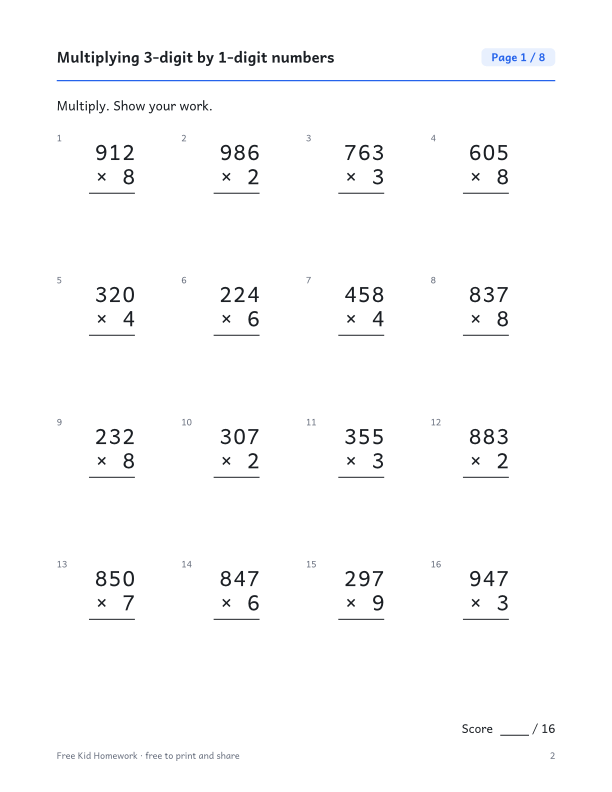
Column multiplication of a 3-digit number by a 1-digit number.
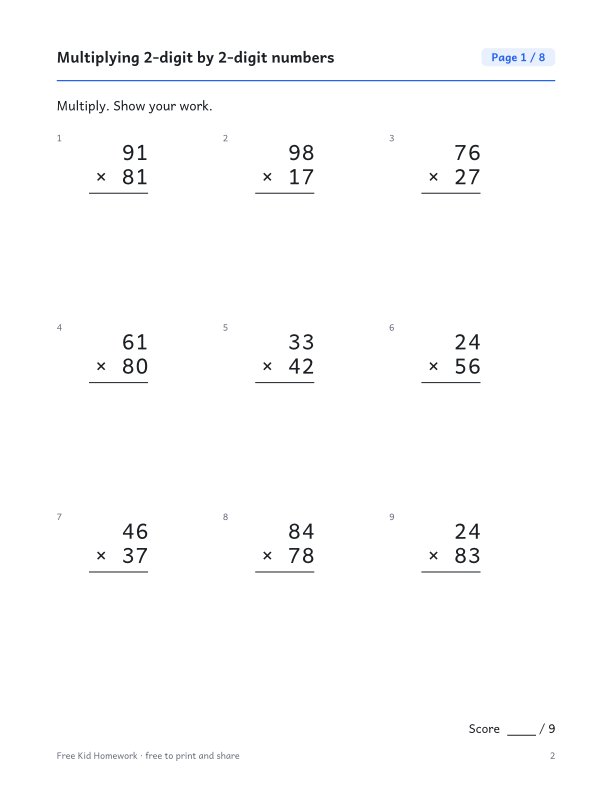
Long multiplication of two 2-digit numbers, with plenty of space for the working.
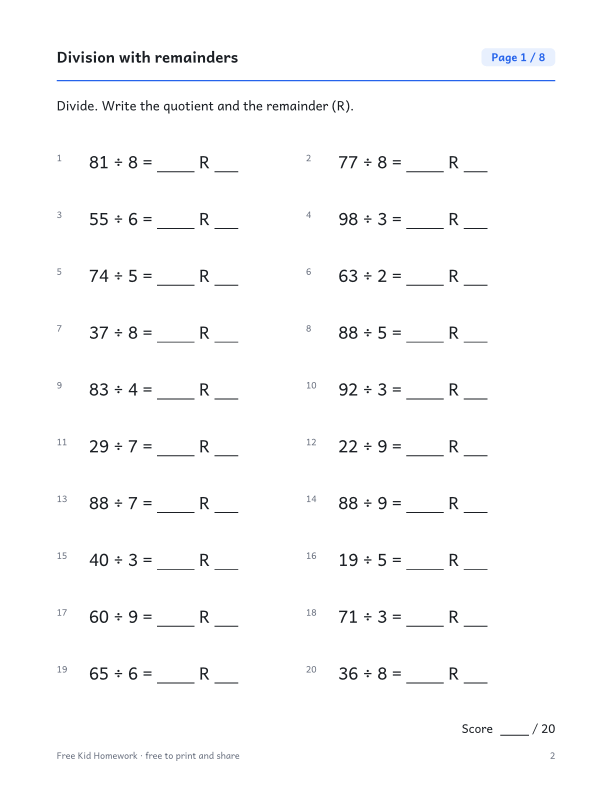
Divide 2-digit numbers by 2 to 9 and write the quotient and the remainder.
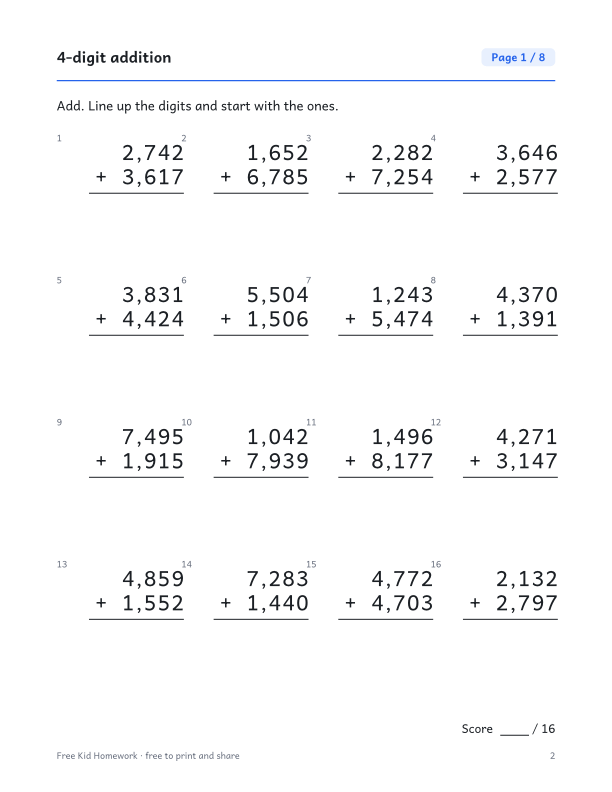
Column addition of 4-digit numbers with regrouping, with sums up to 9,999.
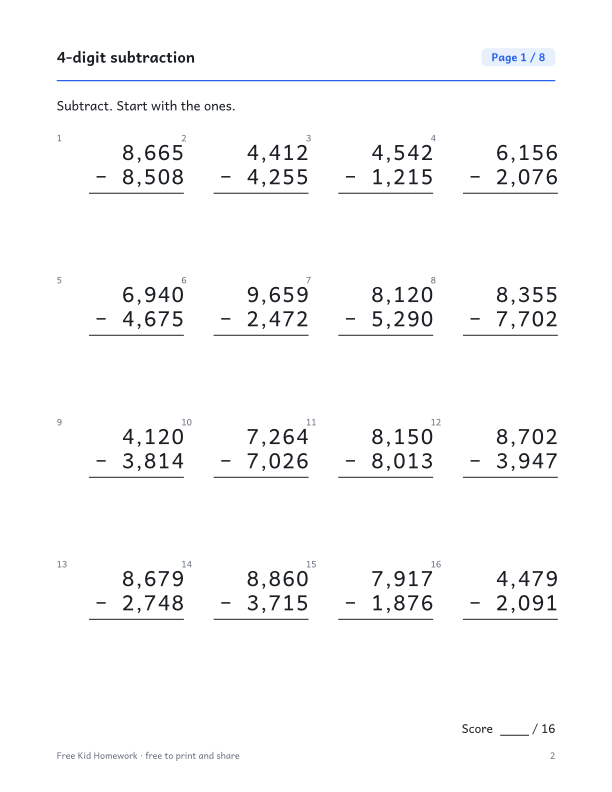
Column subtraction of 4-digit numbers with regrouping across one or more places.
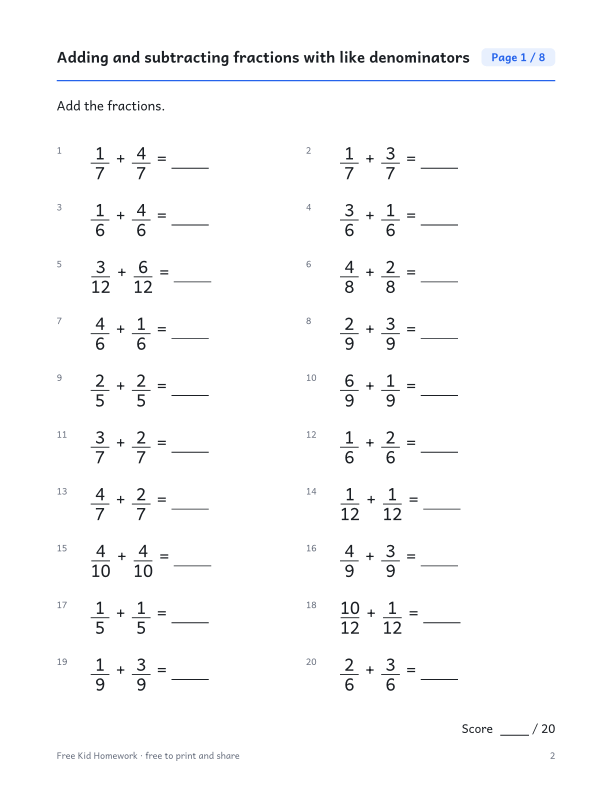
Add (first four pages) and subtract (last four pages) fractions that share the same denominator. Answers are not simplified.
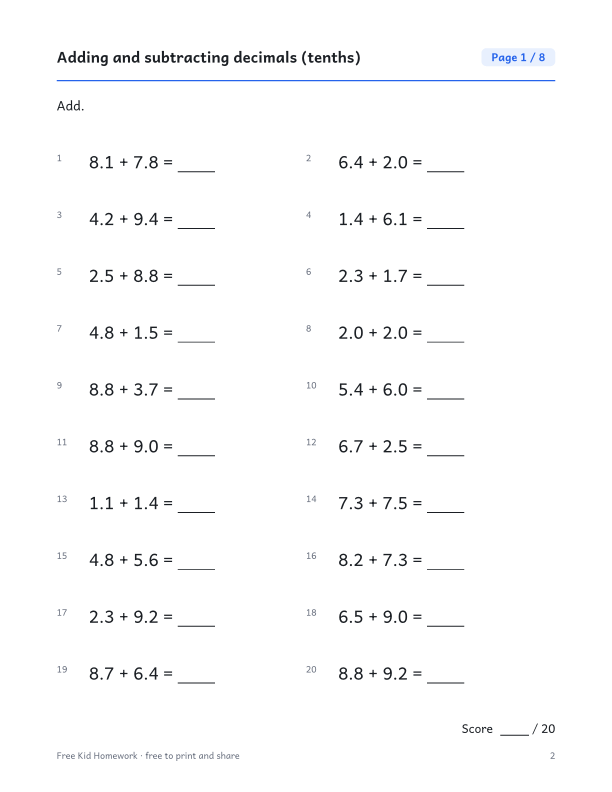
Add (first four pages) and subtract (last four pages) decimal numbers with one decimal place.